Living guide
🏡Best Places for Remote Workers in the UK
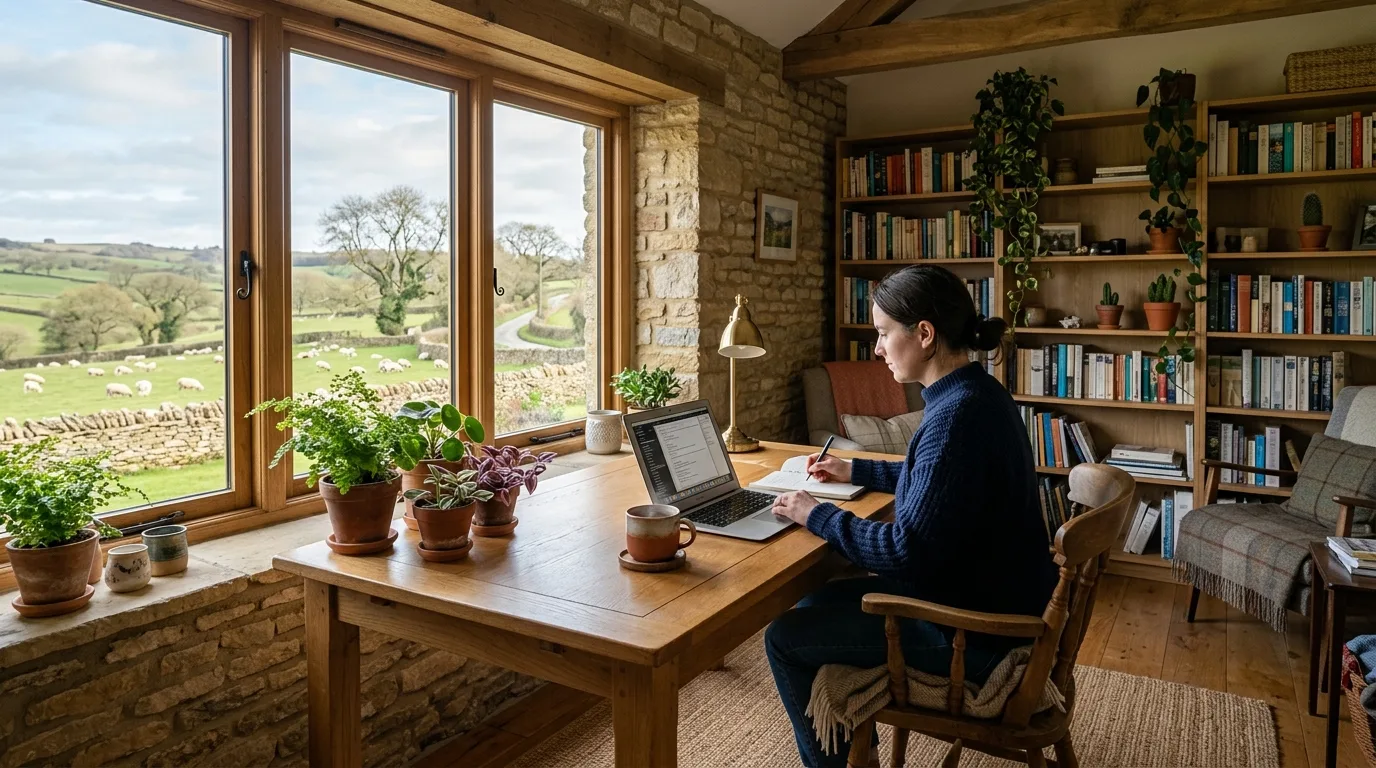
Remote work has quietly become the biggest shift in British housing in a generation. With millions of UK workers now splitting their time between home and office, or working fully remotely, the old rules about where to live no longer apply. You are no longer tethered to a short commute, which opens up coastal villages, market towns, and rural counties that were previously impractical for anyone needing to be at a desk in London or Manchester.
What this really changes is the priorities. When you do not need to reach an office five days a week, the cost per square metre matters far more than minutes to the nearest station. A garden, a spare room for a proper desk, walking routes for the 3pm break, reliable broadband for video calls: these become the deciding factors. For many people, it also becomes realistic to trade a small flat in the South East for a sizeable period home somewhere with real countryside on the doorstep.
How we rank remote-friendly places
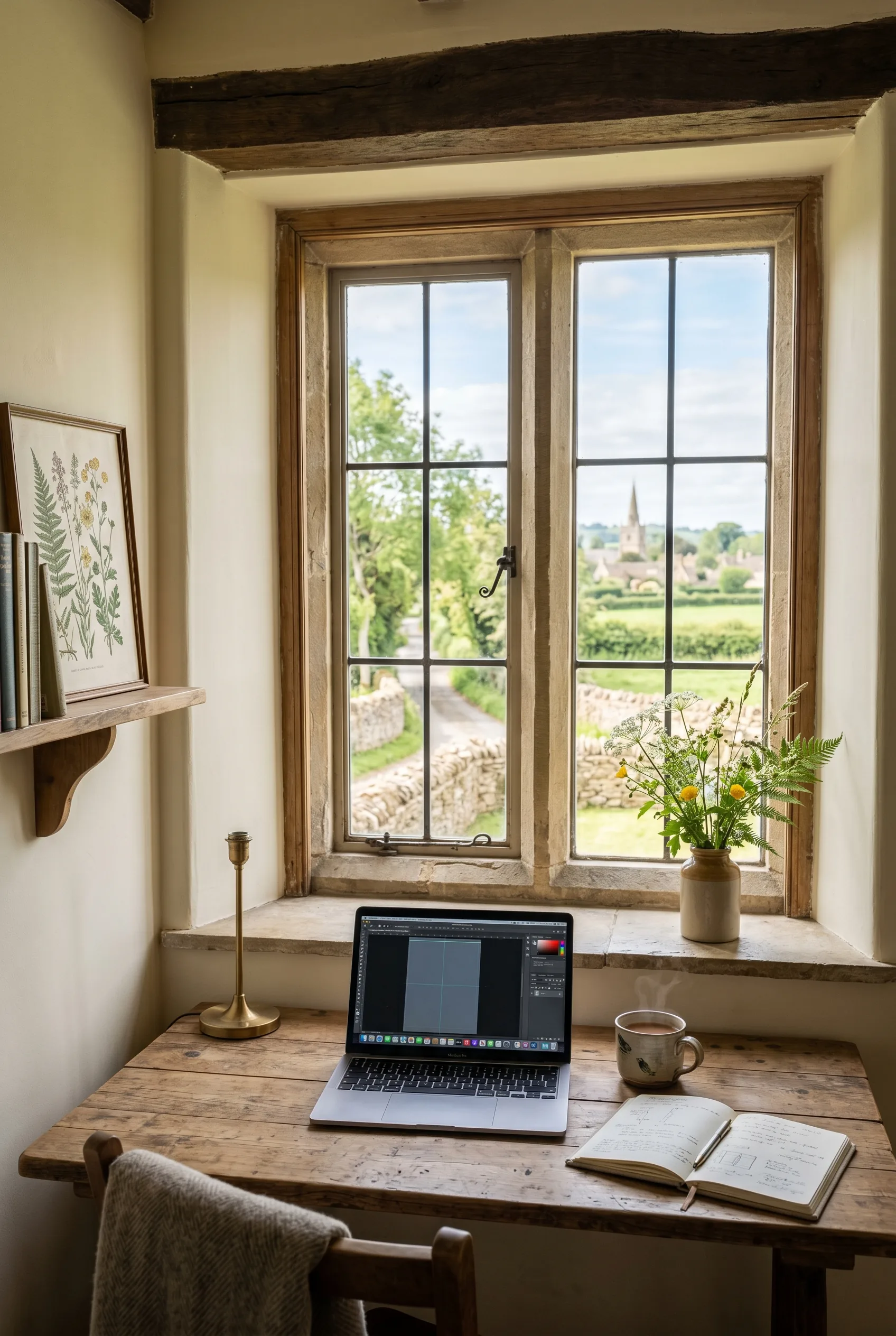
Our rankings are built on that premise. We use a weighted scoring system that boosts affordability (2x), green space (2x), weather (1.5x), and environment (1.5x), while pulling commute weight down to just 0.3x. That produces a ranking which rewards space, scenery, and clean air over proximity to a city centre. The underlying data comes from the Land Registry (house prices), ONS (rents and salaries), Ofcom (average broadband speeds), Ordnance Survey and DEFRA (green space and air quality), and Met Office 30-year climate records.
Broadband deserves special attention. We pull Ofcom Connected Nations data for average download speeds and surface areas with poor coverage so you can avoid them. In practice most of the UK now has usable fibre, but patches of rural Scotland, mid-Wales, and parts of Cornwall still depend on older copper lines that struggle with video calls. Each area detail page shows the average speed so you know exactly what to expect before you commit.
Where the top picks cluster
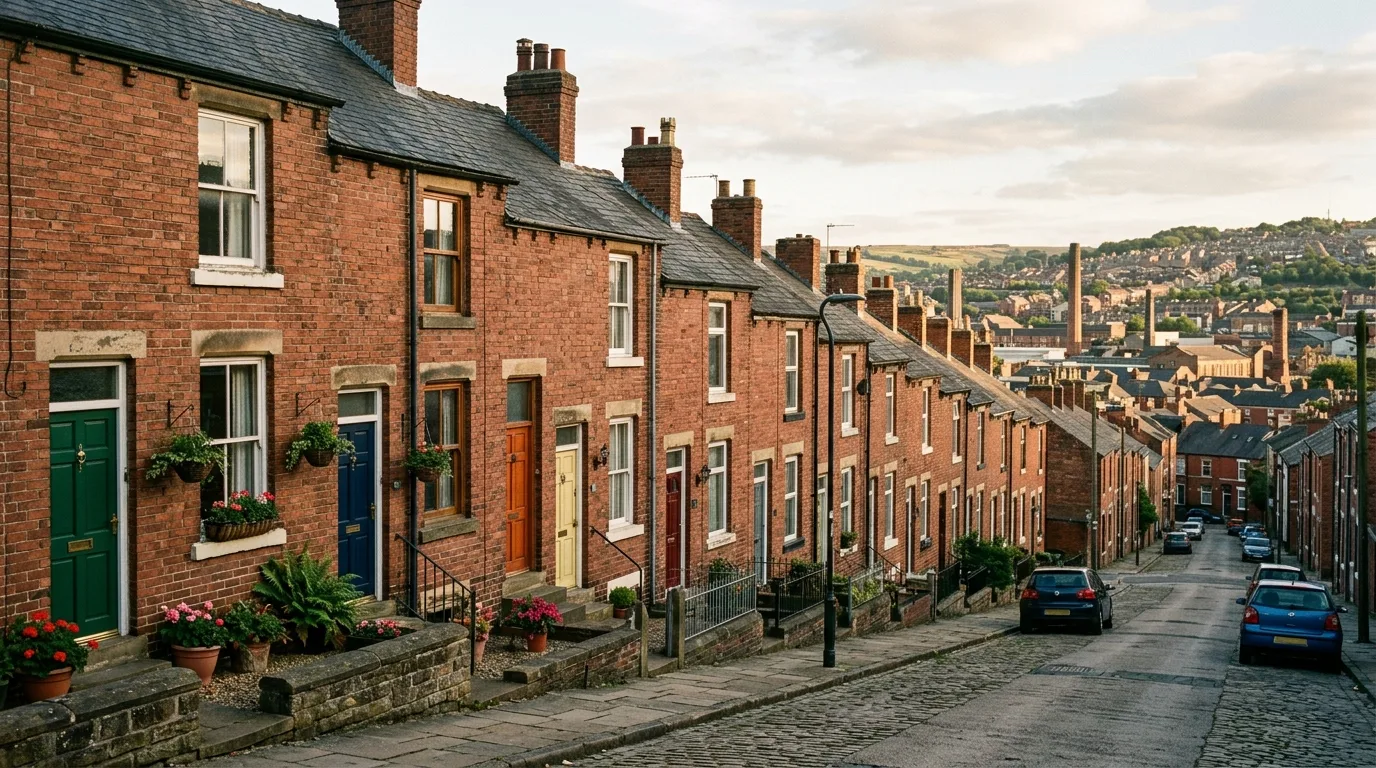
A clear pattern emerges in the results: many of the top-ranking areas are small towns and villages in the North. Parts of Yorkshire, County Durham, and rural Lancashire show house prices at roughly half what you would pay in the South East, with open countryside starting at the edge of town. Welsh border towns, the Scottish Lowlands, and pockets of Lincolnshire and Cumbria also perform strongly. These are places that were always beautiful, but were previously off-limits if you needed to be in an office each day.
The lifestyle factors
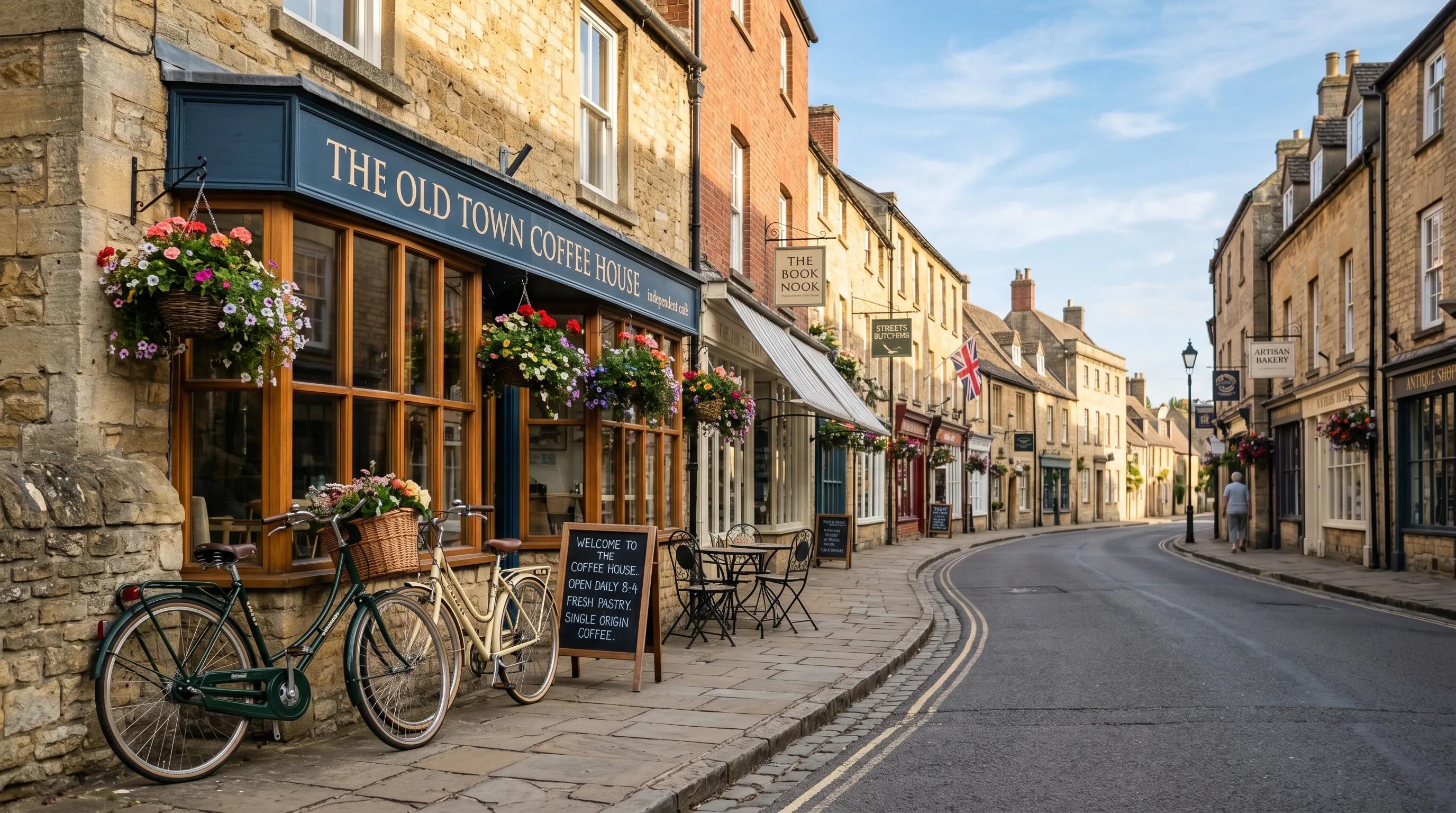
One factor no spreadsheet can fully capture is that the loneliness of working from home is real. The strongest remote worker towns tend to have a functional high street with a couple of independent cafes, a pub that serves food, and a weekly market or regular community events. These act as the "third place" between home and a formal office, and they matter more than people expect. Coastal and market towns excel here because they already have a settled resident population who use the local amenities year-round.
Dedicated workspace is worth thinking about too. If you plan to work from home long-term, an extra bedroom or outbuilding that can become a proper office is close to non-negotiable. Rural properties often have the space, and period homes in market towns frequently include attic rooms or adjoining barns that convert well. The cost-of-living calculator on each area detail page will help you work out what kind of home your budget actually stretches to in each location.
What to look for
Start with the affordability and broadband figures together, not separately. An area with cheap housing but poor connectivity is a false economy if you cannot take video calls reliably. Also weigh the green space score against the amenities score: the most remote, cheapest places often lack the shops, cafes, and transport links that keep remote life sustainable. The strongest picks tend to be mid-sized market towns that score well on both sides of that trade-off.
How we rank: Ranked using our Remote Worker weighted preset, which boosts Affordability (2x), Green Space (2x), Weather (1.5x), and Environment (1.5x) while reducing Commute (0.3x).
📊
20
Areas Ranked
🏠
£290k
Avg House Price
🏡
53/100
Avg Affordability
📍
Yorkshire and the Humber
Top Region
Where they are.
Loading map...
Top 20 Remote Workers


Can you afford these areas?
Score Comparison: Top 5
| Dimension | Edinburgh | Durham | Shrewsbury | Stirling | Sheffield |
|---|---|---|---|---|---|
| Affordability | 45 | 80 | 62 | 66 | 68 |
| Safety | 78 | 82 | 82 | 85 | 50 |
| Weather | 72 | 74 | 64 | 82 | 72 |
| Green Space | 68 | 42 | 65 | 44 | 58 |
| Amenities | 85 | 58 | 58 | 62 | 68 |
| Commute | 66 | 45 | 55 | 48 | 55 |
| Environment | 50 | 50 | 50 | 50 | 50 |
| Health & Wellbeing | 55 | 55 | 55 | 55 | 55 |
| Education | 50 | 50 | 50 | 50 | 50 |
| Overall | 71 | 65 | 66 | 66 | 62 |
Related guides.
Most Affordable Places to Live in the UK
With the average UK house price now above £280,000 and rents at record highs, finding an affordable place to live mat...
View guide
Greenest Places to Live in the UK
Living near green space is not just pleasant, it is measurably good for you. Research consistently links access to pa...
View guide
Best Weather in the UK
The UK is not famous for its weather, but the reputation is a little unfair. Sunshine totals between the sunniest and...
View guideMatch me
Not sure which area suits you?
Take our quiz to find your personalised best match.
Find my match