Living guide
🛡️Safest Places to Live in the UK
Feeling safe in your neighbourhood is fundamental to quality of life. Whether you are walking home after dark, letting the children play outside, or simply leaving a window open on a summer evening, low crime makes everyday life more relaxed and enjoyable. It is consistently one of the top priorities people cite when deciding where to live, and it tends to be the factor they refuse to compromise on even when budgets tighten.
Safety in the UK is also remarkably local. Two towns that sit fifteen miles apart can have crime rates that differ by a factor of three, and within a single city the picture often changes street by street. That is why a national average is almost useless for this kind of decision: you need data that drills down to the community you would actually be moving into.
How we measure safety
Our safety rankings are built entirely from official Police UK recorded crime data, which covers every police force in England and Wales and is refreshed monthly. We calculate the total number of reported offences, including violent crime, burglary, robbery, vehicle crime, and anti-social behaviour, per 1,000 residents. Those figures are then normalised against the national distribution to produce a 0 to 100 safety score, where higher is safer.
Crime rates alone do not tell the whole story, so each area detail page breaks the headline number down into its component offence types. An area can have a slightly elevated overall rate but very low violent crime, which matters enormously if you are comparing a lively town centre against a sleepy village. We surface that breakdown so you can weigh the risks that actually concern you.
Where the safest places cluster
A clear pattern emerges from the data: rural and semi-rural areas consistently outperform urban centres for safety. Many of the UK's lowest-crime communities are market towns and villages in areas like the Yorkshire Dales, the Cotswolds, rural Mid Wales, and the Scottish Borders. Small populations, tight-knit communities, and the practical friction of being far from motorways all contribute to the pattern.
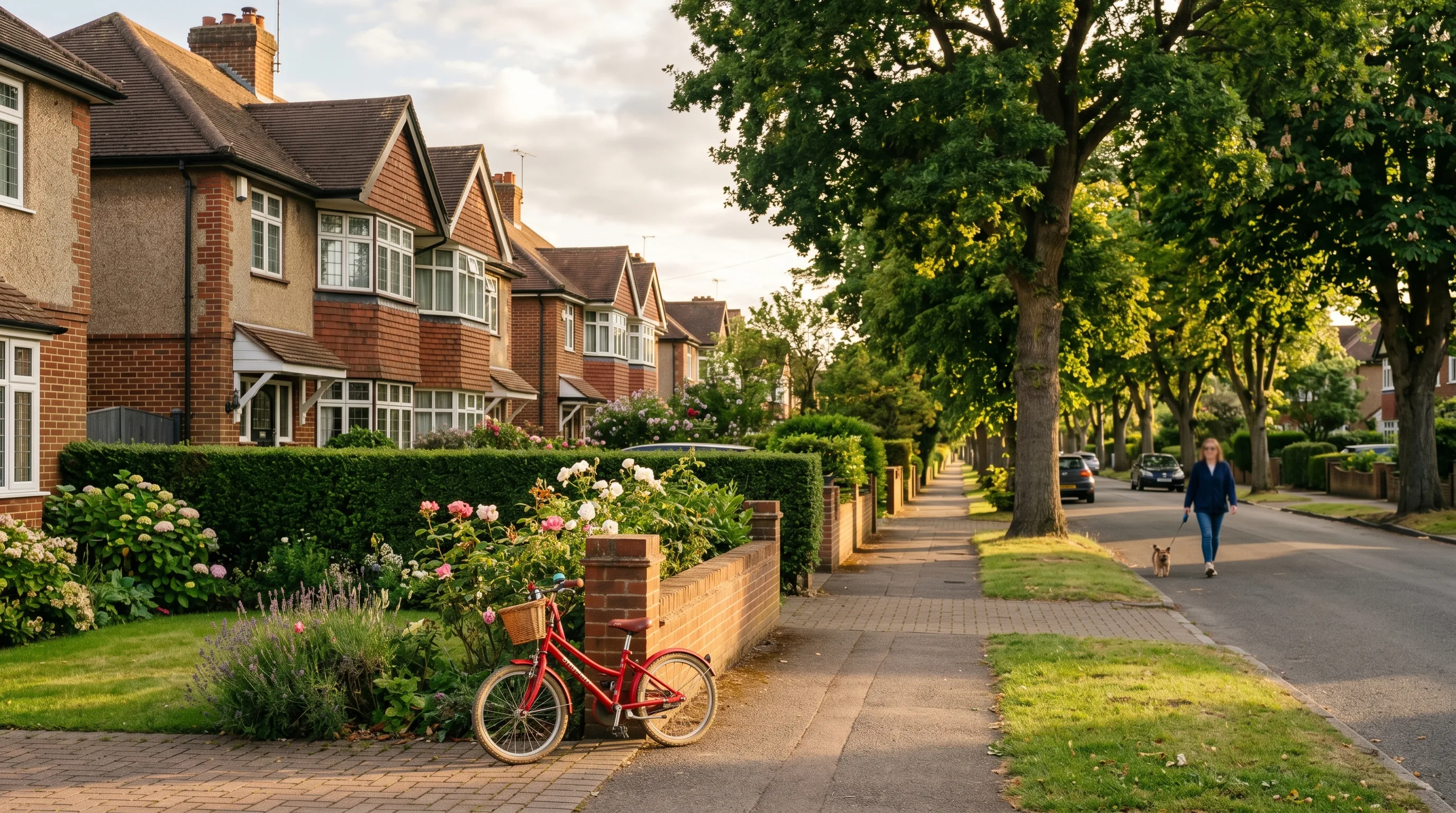
Larger towns can score well too, particularly affluent commuter belts in the Home Counties and suburban districts on the edges of cities like Sheffield, Edinburgh, and Cardiff. Within big cities the picture is mixed: central wards usually drag overall scores down, while leafy suburban neighbourhoods a few miles out can rival rural villages. The league table is a good starting point, but the detail pages are where the interesting reading lives.
Beyond the crime rate
Recorded crime is a strong proxy for safety, but it is not the only signal worth paying attention to. Low population density makes certain offences rarer simply because there are fewer targets, not because a place is especially well policed. Well-lit streets, active community groups, good schools, and busy independent shops all contribute to the feeling of safety in a way that does not show up in raw statistics. When you are visiting a shortlisted area, an evening walk and a morning school-run tell you things no dataset can.
What to look for
Focus on the crime rate per 1,000 residents rather than total offences, since that accounts for population size, and look at the breakdown by category before committing. Compare the shortlist side by side using our comparison tool to see whether an area is genuinely safer or just sleepier. And if possible, visit at different times of day: safety is partly about data, partly about how a place actually feels when you are standing in it.
How we rank: Ranked by our Safety dimension score (0–100), which is derived from Police UK recorded crime rates per 1,000 population. Higher scores indicate lower crime.
📊
20
Areas Ranked
🏠
£312k
Avg House Price
🛡️
71/100
Avg Safety Score
📍
South West
Top Region
Crime Breakdown
Top 5 safest areas: crime rates vs house prices
| Area | Crime Rate | Safety Score | Avg House Price |
|---|---|---|---|
| Harrogate | 42.0/1,000 | 88 | £350,000 |
| Stirling | 50.0/1,000 | 85 | £210,000 |
| Durham | 54.0/1,000 | 82 | £180,000 |
| Shrewsbury | 48.0/1,000 | 82 | £260,000 |
| Bath | 55.0/1,000 | 80 | £450,000 |
The average house price across these top 20 safest areas is £312k. While some of the safest areas command higher prices, several offer excellent value.
Where they are.
Loading map...
Top 20 Safest Places


Did you know?
The average crime rate across these top 20 areas is just 64.5 offences per 1,000 residents, significantly below the national average.


Did you know?
The average house price across these safest areas is £312k. Many of the UK's safest communities are also surprisingly affordable.


Did you know?
South West dominates this list with 20% of the top 20 safest areas, making it the standout region for low crime.


Can you afford these areas?
Top 10 by Safety Score
Region Distribution
Where the top 20 areas are located
Related guides.
Most Affordable Places to Live in the UK
With the average UK house price now above £280,000 and rents at record highs, finding an affordable place to live mat...
View guide
Best Places for Families in the UK
Choosing where to raise a family is one of the biggest decisions parents make, and getting it right can transform dai...
View guide
Healthiest Places to Live in the UK
Where you live has a profound effect on both physical and mental health. Access to GP surgeries, proximity to hospita...
View guide